Leave Your Message
Structural engineering, barrier science, and circular design standards for high-end luxury cosmetics, foundations, serums, and fluid skincare packaging.
In the rapidly modernizing cosmetic and personal care industry, the intersection of sustainability and luxury has created substantial engineering challenges. High-formulation beauty products—such as volatile alcohol-based perfumes, essential oil serums, organic liquid foundations, and active retinol concentrates—have historically relied exclusively on high-density glass containers. Glass remains unsurpassed in chemical inertness, organoleptic neutrality, and consumer luxury perception. However, the international push toward circular economies and extended producer responsibility (EPR) mandates has forced luxury beauty conglomerates to re-evaluate their secondary packaging. Plastic outer shells, metallized caps, and non-recyclable multi-laminate cartons are rapidly being superseded by rigid, recyclable paperboard tubes.
Integrating makeup glass containers inside cylindrical paperboard housings is not merely a visual shift; it is an intricate structural engineering discipline. The greatest commercial vulnerability in this hybrid arrangement lies in the threat of liquid leakage, mechanical drop fracture, and micro-capillary migration. When liquid cosmetics leak inside secondary packaging, conventional paper fibers swell, delaminate, and lose their compression strength by up to 85%, resulting in catastrophic shipping failures, costly retail returns, and brand dilution. Hence, defining stringent design requirements for leak-proof paper tube systems enclosing glass makeup vessels has emerged as a top packaging priority across European, North American, and Asian beauty hubs.
Incorporating biodegradable biopolymer linings (PLA/PHA) and aqueous dispersion coatings inside fiber tubes to block lipid and solvent seepage during catastrophic pump failures.
Utilizing molded pulp inserts, spiral-wound radial spring geometries, and custom rolled-lip friction bezels that absorb omnidirectional drop impacts up to 1.8 meters.
Ensuring 100% paper-stream recyclability without requiring complex disassembly tools, complying fully with EU Packaging and Packaging Waste Directives (PPWR).

Achieving reliable leak resistance when coupling brittle, high-mass makeup glass containers with pliable cellulose-based tube housings demands strict adherence to dynamic tolerances. Liquid formulations containing volatile organic compounds (VOCs), surfactants, or low-surface-tension oils can bypass standard pump threads or neck gaskets under transit vibration and pressure drops (such as cargo air freight). Below are the five foundational engineering prerequisites:
| Performance Vector | Design Requirement Specification | Technical Mechanism & Failure Mode Mitigated |
|---|---|---|
| Hermetic Collar Seal | Torque threshold: 1.2 to 1.8 N·m with EPDM/PTFE liners | Prevents capillary migration of liquid foundation at the glass finish neck junction under 95 kPa atmospheric decompression. |
| Caliper & Burst Strength | Multi-ply virgin kraft board, minimum 650 gsm (≥1.2mm wall) | Resists side-crush forces during transit stacking; prevents container collapse and subsequent glass shearing under ASTM D642. |
| Hydrophobic Inner Coating | Water-based dispersion barrier (Cobb 60 < 8 g/m²) | Stops aqueous and solvent-phase makeup from soaking into paperboard walls if accidental nozzle dripping occurs during consumer handling. |
| Axial Tolerance Cushioning | Molded fiber bottom cup with ±0.15mm radial tolerance | Eliminates micro-movement and glass-to-paper rattling; neutralizes shockwaves during drop tests (ISTA 3A standard). |
| Closure Friction Fit | Rolled-edge telescoping overlap of ≥35mm height | Provides secondary gas and droplet entrapment, keeping any micro-leakage confined without penetrating outer luxury graphics. |
Standard virgin and recycled paper fibers are naturally hydrophilic. When exposed to cosmetic emulsions that contain both water and oil phases, cellulose fibers rapidly absorb the liquid via capillary action. This weakens the hydrogen bonds between fibers, leading to swelling, warping, and an immediate reduction in structural integrity. To counteract this, modern leak-proof paper tube designs incorporate advanced barrier chemistries:


As the beauty market fragments into hyper-specialized treatment categories, the requirements for leak-proof paper tubes housing glass primary containers diverge significantly. Below is an exploration of three demanding industrial applications:
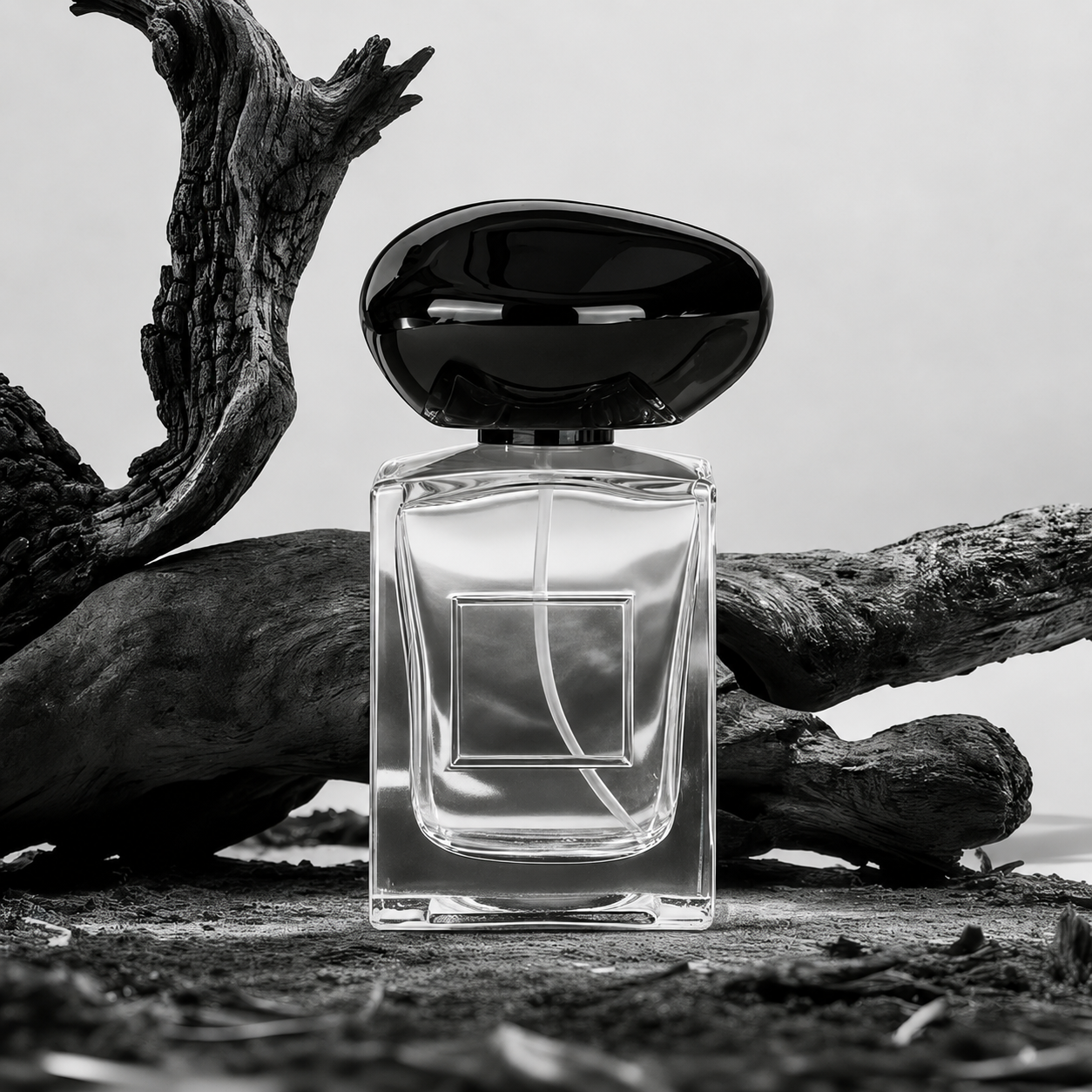
Fragrance liquids possess high percentages of denatured alcohol (ethanol), which exhibits rapid evaporation rates and low surface tension. A microscopic nozzle weep will dissolve regular printing inks and degrade outer fiber structures. Leak-proof paper tubes for glass perfume bottles require vapor-sealed inner linings, internal vapor dampers, and hermetic friction seals that isolate alcohol vapor, preserving both the outer foil stamping and preventing aromatics from evaporating on store shelves.
Cosmetic foundations are complex biphasic water-in-oil (W/O) emulsions loaded with heavy pigment particles (titanium dioxide and iron oxides). If subjected to pump leaks under cargo depressurization, the oily lipid phase separates and penetrates secondary cartons. Our precision engineered paper tubes utilize oil-resistant fluoro-free barrier coatings with tight-fitting collar cushions that arrest bottle rotation, locking the pump actuator firmly in place during international logistics.
Active facial oils, vitamin C suspensions, and squalane drops are light-sensitive and prone to oxidation. Glass dropper bottles are vulnerable to accidental squeezes or dropper thread looseness. Combining amber or UV-coated glass with an opaque, light-blocking rigid paper canister provides both full-spectrum photodegradation protection and localized catchment traps in the base plug, isolating any dropper leakage without structural failure.
The future of makeup glass container packaging lies in parametric design and algorithmic structural analysis. Nextruct leverages predictive modeling to simulate fluid dynamics, hydro-expansion tolerances, and drop impact stresses across hundreds of paper-to-glass dimension variations. Furthermore, next-generation bio-coatings synthesized from lignin derivatives and nanocellulose crystals (CNC) are achieving Cobb values that rival petroleum plastics, allowing makeup brands to deploy fully recyclable, leak-resistant, and high-impact packaging that leads global carbon-reduction trends.